





Website Redesign + Replatform Results: 4x Qualified Leads in 4 Months (Without the “Migration Dip”)
Website Redesign + Replatform Results: 4x Qualified Leads in 4 Months (Without the “Migration Dip”) If you’re considering a website redesign or replatform, you already know the part that keeps marketing leaders up
The Merlin Principle: A B2B Marketer’s Guide to Achieving the “Impossible”
The Merlin Principle: A B2B Marketer's Guide to Achieving the "Impossible" In the legend of King Arthur, Merlin lived his life backwards through time. This unique perspective gave him extraordinary wisdom and foresight. What

The 20% That Drives 80% of Revenue (And How to Find It)
The 20% That Drives 80% of Revenue (And How to Find It) Most marketing teams aren't short on ideas. They're short on clarity. There's always more to do: pages to update, content to rewrite,

Generative Engine Optimization (GEO): How to get cited by AI
Generative Engine Optimization (GEO) and how to get cited by AI: The new front page for B2B brands When Your Buyers Ask ChatGPT For Help - Will It Point to You? Your best-fit buyers
From Experiments to Execution: Putting Custom GPTs to Work in SEO & Content Production
A preview of Leslie Carruthers' talk at State of Search 2025, with a 1-page fix to turn your AI trials into real results. Most B2B marketing teams are stuck in the AI experimentation
The B2B Marketer’s Blueprint for an AI + Human Hybrid Team
TSG Founder Leslie Carruthers to share a proven framework for driving real ROI with AI at LavaCon 2025. We keep hearing the same thing from B2B marketing leaders: “We have AI tools, but

4 Free AI Tools B2B Marketers Are Using Right Now
TL;DR: We’re gifting you 4 plug-and-play AI tools our clients are using right now to save time and scale marketing. You can dive in, or reach out and we’ll walk through what’s best for

The LinkedIn Update That Saved a CMO’s Job (And Could Save Yours)
This is the 15-Minute LinkedIn fix every marketing executive needs in 2025. Last month, a Fortune 500 CMO was passed over for a CEO role. The feedback? "Strong traditional marketing background, but no visible

AI as Teammate: The 5-Stage Integration Map
AI as Teammate: The 5-Stage Integration Map How modern teams are building better workflows, faster cycles, and smarter outcomes—with AI embedded in the org chart. Your Team’s Not Broken. It’s Just Missing a Teammate.

Want to Know How to Win Online?
Here's what I would advise a friend who wanted to know the fail-safe way to win online. This is just the beginning. AI opens doors to sustainable growth and

AI in B2B Marketing: content creation for B2B Manufacturing
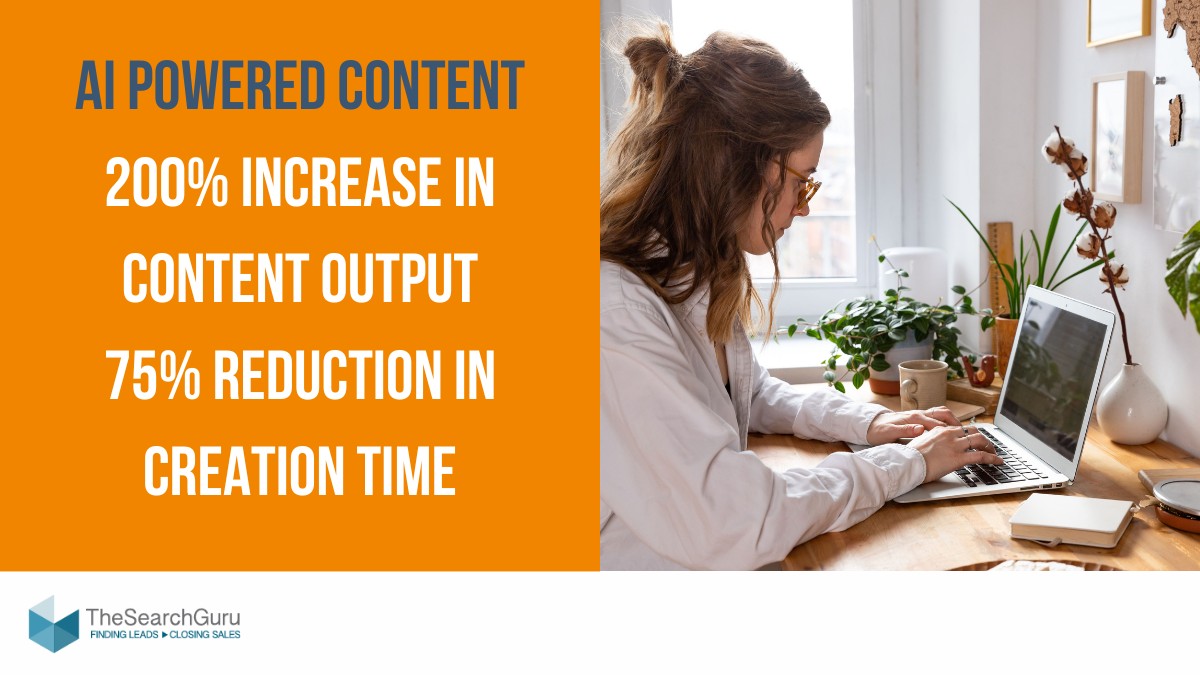
Case Study: Accelerating Content Creation with AI for a B2B Manufacturing Leader In just six months, The Search Guru helped a B2B manufacturing company transform its digital content strategy with AI-powered solutions, achieving a

AI in SEO: The Pros, Cons, and What It Means for Your Strategy
Aka: The Human Element in AI-Powered SEO: Why Expertise Still Matters Digital marketing is changing fast, and artificial intelligence (AI) is playing a big role in that shift—especially in SEO. Savvy businesses are

E-E-A-T in B2B SEO: Navigating the Complex World of Experience, Expertise, Authority, and Trust
TL;DR E-E-A-T (Experience, Expertise, Authoritativeness, Trustworthiness) is crucial for B2B SEO success. It impacts rankings, builds credibility, and drives conversions in long, complex sales cycles. Implementing E-E-A-T strategies can help prove ROI and overcome
What KPIs really matter in the B2B world?
Struggling to pinpoint the metrics that drive growth? You’re not alone. Discover how top marketers are laser-focused on the metrics that truly matter, helping them drive growth and refine their strategies. Get actionable insights
Are you struggling to keep up with the rapid pace of AI in marketing?
Tired of feeling behind the curve with AI in marketing? Discover how top B2B marketers are using AI to gain an edge and drive growth. Get actionable insights gleaned from our exclusive interviews on
What Really Keeps Marketing Heroes Up at Night?
Introduction On our podcast, "Marketing Heroes [Unfiltered]," Leslie Carruthers and Danny Davidson ask top B2B marketers: What keeps you up at night? The answers we’re getting are insightful and sometimes surprising. Index/ TLDR

Unlocking Global Success: Smart Implementation of Powerhouse Hreflang Tag Delivers
Caution: Missing, incorrect or unrecognized hreflang tags sabotage multilingual websites, costing you leads and sales TL;DR (Introduction) Hreflang are super handy tags that tell Google your website has a few versions of the content
5 Steps to Get your New Marketing People Up to Speed
A common challenge for digital marketers in 2022 is welcoming new people to the team. As the Great Resignation continues, and many people move from one sector to another, you may be dealing with far
B2B Landing Pages: Great Examples of Huge Wins & Epic Fails
Before we get into what does NOT work for Business to Business (B2B) ECommerce Landing Pages, let’s go over the basics. B2B Ecommerce is selling products or services between businesses through the internet. A
VSEO: 5 YouTube SEO tips for video optimization that really work
VSEO, or video search engine optimization, is different from traditional search engine optimization, but many of the same basic SEO principles hold true. VSEO has many benefits for business owners.

Why improving User Experience (UX) is the best thing you can do for SEO.
We recently ran a poll on LinkedIn asking people" "What is more important UX (user experience) or SEO (search engine optimization) once a website has high domain authority (<50 DA): To our delight, the
7 Facebook Ad Tactics to Help You Deal with New Targeting Option Limitations
In November 2021 Facebook / Meta announced that starting January 19, 2022 they will remove sensitive detailed targeting options, such as options referencing causes, organizations, or public figures that relate to health, race or